I'd like to take you to the movies, but they don't allow you to bring your own snacks (;

I'd like to take you to the movies, but they don't allow you to bring your own snacks (;
Creamy Baked Mac and Cheese (And the Science Behind It)
Creamy baked mac with gouda, provolone, sharp cheddar and colby jack. Smooth, not greasy, and it still tastes good the next day.
prep time: 35 min active
cook time: 1 hr total
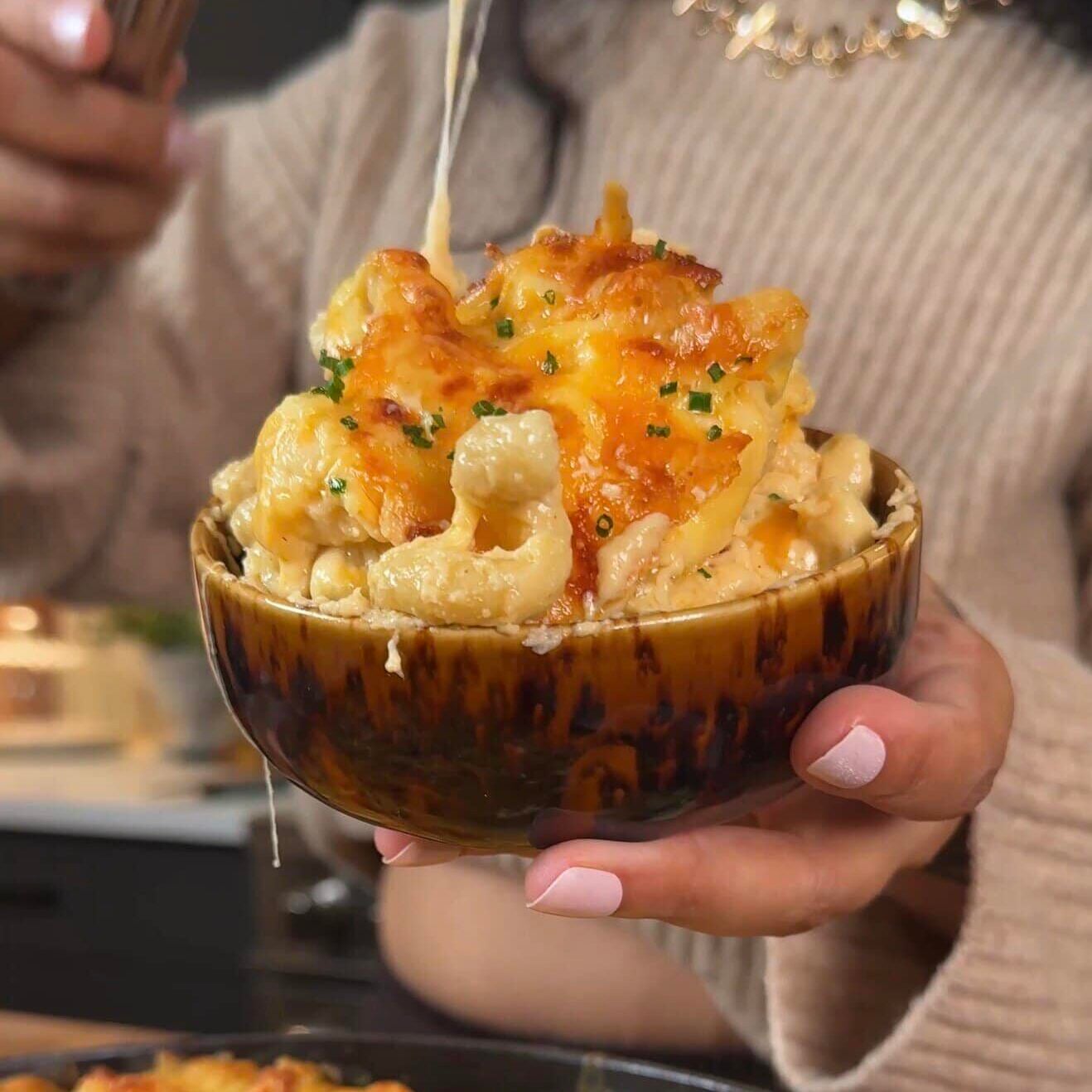
My Secrets to Creamy Baked Mac and Cheese (And the Science Behind Them)
Updated November 2026: This is the newest version of my creamy baked mac. I updated it slightly, and this is exactly how I make it now.
Listen, everybody has an opinion about mac and cheese, and I’m no different. But when it comes to making a baked mac that’s creamy, flavorful, and still tastes good the next day, there’s actually a bit of science behind it.
For me, water content, heat, and starch are three of the most important things to pay attention to. Here’s why:
1. Choose Cheeses That Melt Creamy, Not Just Stretchy
If you want a smooth cheese sauce that doesn’t become overly greasy and reheats well the next day, pay attention to the moisture, fat, and protein content of your cheeses.
I generally gravitate toward creamy-melting cheeses with moderate to lower moisture content, often around 35–45%, although that’s not a hard rule.
And that brings me to mozzarella.
Mozzarella is a popular choice for baked mac and cheese, BUT I personally don’t believe it belongs in there. Like, I’ll eat a mac that’s in front of me because it’s mac, but mozzarella wouldn’t be my first choice.
It has an elastic protein structure, which makes it great for cheese pulls, but not necessarily for the creamy texture I’m looking for. As it cools, it firms up, and when reheated, it can become rubbery instead of returning to that smooth, creamy consistency.
Even low-moisture mozzarella can give you that chewy, stretchy texture. And while there’s nothing inherently wrong with that, it’s just not what I want in my baked mac.
2. Cook on Low Heat
Maybeeeee medium-low.
Blooming your seasonings is important, but things like garlic powder, paprika, and pepper are heat-sensitive. If your heat is too high, they can scorch and make your mac bitter.
The same goes for your roux. Cook your flour gently for about 2–4 minutes, until it smells slightly nutty. You’re cooking out that raw flour taste without browning it too much.
Low heat also matters when you’re incorporating your cheese. Too much heat can cause the proteins to tighten and the fat to separate, leaving you with a greasy or grainy sauce.
Oh, and BTW, my secret ingredients are soy sauce and Worcestershire sauce.
Before you knock it, hear me out.
They’re packed with glutamates, which are responsible for that delicious savory, umami flavor you also find in aged cheeses.
A little bit helps deepen the flavor of your mac so it doesn’t taste flat or overwhelmingly rich. It’s that savory complexity that makes you want to keep coming back for another bite.
And no, your mac isn’t going to taste like soy sauce.
3. There’s ALWAYS an argument about whether baked mac and cheese needs a roux, and personally, I think they can all be great.
What matters is how well your sauce comes together and stays together.
There are several ways to achieve that creamy consistency, and they work a little differently.
Eggs: Egg yolks contain lecithin, a natural emulsifier that helps fat and water stay mixed. Eggs also help give baked mac that custardy structure as they cook.
Roux: A roux uses starch from flour to thicken the sauce. As the starch gelatinizes, it helps stabilize the mixture, keeping the sauce creamy and reducing the chances of separation.
Sodium citrate: This is commonly found in processed cheeses like Velveeta. It’s an emulsifying salt that changes how cheese proteins interact with calcium, helping them disperse more evenly and creating that super-silky, smooth consistency.
Different methods, different science, but we’re all trying to accomplish the same thing: a creamy, cohesive mac and cheese.
And that’s really the point. You can use the best cheeses in the world, but if you don’t understand how they behave with heat, moisture, and the other ingredients in your sauce, you can still end up with a greasy, grainy mess.
Now, with all that out of the way, let’s make some mac and cheese.
Makes: one 9×13 pan
Active time: 35 min | Total time: about 1 hr
From the Kitchen
Before you start:
- Heat the oven to 350°F.
- 2 cups of shredded cheese is one 8 oz block. Shred it fresh.
Why This Works:
- The cheese blend is all creamy melters. Gouda, provolone, sharp cheddar and colby jack melt smooth instead of stretchy, so the sauce stays creamy and reheats well. No mozzarella here.
- Shredding your own cheese keeps the sauce silky. Pre-shredded cheese is coated in starch so it doesn’t clump in the bag, and that starch makes the sauce grainy.
- Evaporated milk has less water and more milk protein than regular milk, which helps hold the sauce together so it doesn’t break or go greasy in the oven.
- Low heat keeps the garlic powder, paprika and pepper from scorching and turning bitter, and keeps the cheese from tightening up and squeezing out its fat.
- Cooking the roux 2 to 4 minutes cooks out the raw flour taste, and the starch keeps the sauce stable so it stays creamy.
- Soy sauce and Worcestershire are packed with glutamates, the same savory umami you get in aged cheese. Your mac won’t taste like soy sauce, it just won’t taste flat.
- Pulling the pasta 2 minutes early means it finishes cooking in the oven while it soaks up sauce, so it doesn’t go mushy.
Creamy Four Cheese Baked Mac and Cheese
Ingredients
For the pasta
- 1 lb cavatappi or elbow macaroni
For the cheese
- 2 cups gouda shredded fresh
- 2 cups provolone shredded fresh, ask the deli counter for an 8 oz block
- 2 cups sharp cheddar shredded fresh
- 2 cups colby jack shredded fresh
For the sauce
- ½ cup unsalted butter 1 stick
- 2 tsp salt
- 1 tsp black pepper
- 1 tsp garlic powder
- 1 tsp smoked paprika
- 1 tsp soy sauce
- 2 tsp Worcestershire sauce
- ½ cup all-purpose flour
- 2 (12 oz) cans evaporated milk
- 2 cups heavy cream
To finish
- chopped chives
Instructions
The pasta
-
Boil the pasta for 2 minutes less than the package instructions (usually 5 to 7 minutes). Drain and set aside.
The cheese
-
While the pasta cooks, shred all the cheeses and mix them together in a large bowl.
The sauce
-
In the same pot you cooked the noodles in, melt the butter over low (or medium-low) heat. Once bubbling, add the salt, black pepper, garlic powder, and smoked paprika, stirring for 30 seconds to bloom the flavors. Stir in the soy sauce and Worcestershire sauce.
-
Turn the heat to the lowest it will go! Sprinkle in the flour and whisk continuously for about 2 to 4 minutes to cook out the raw taste. This forms a smooth roux that will thicken the sauce.
- Ready when: it smells a little nutty.
-
Slowly pour in the evaporated milk, whisking constantly until smooth (like seriously, whip the crap out of it). Repeat with the heavy cream, whisking to fully combine.
-
Add three-quarters of the shredded cheese (6 cups). Stir briefly, letting it partially melt for a gooey texture.
The bake
-
Add the cooked pasta to the cheese sauce, folding until evenly coated.
-
Pour the mac and cheese into the baking dish and sprinkle the remaining cheese (2 cups) on top. Bake for 20 to 25 minutes.
- Ready when: golden and bubbly. For a deeper golden top, broil right away for 2 to 3 minutes, or until the cheese crust is to your liking.
-
Top with chopped chives and serve warm.
More from Taelor
You're coming with me. Pick a platform.